AI Seasonal Cooking Checklist: Plan Meals, Shop & Cook
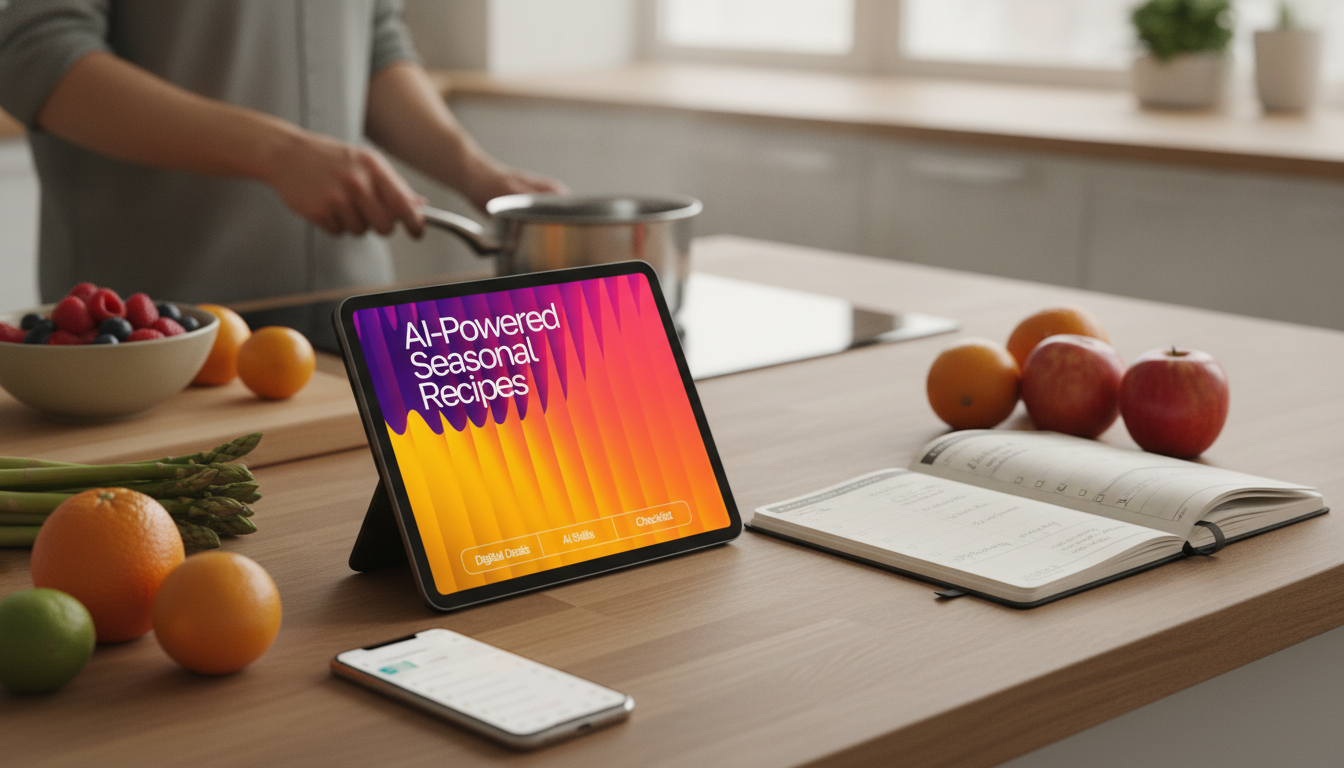
AI-Powered Seasonal Cooking Checklist: Plan, Shop, and Cook with Fresh Ingredients All Year
Seasonal cooking feels effortless when the busywork is handled fast: figuring out what’s in season near you, choosing recipes that share ingredients, swapping around allergies, and scaling portions without extra math. An AI-assisted checklist gives weeknight cooking a repeatable rhythm—so you can enjoy fresh produce, spend less time scrolling, and waste fewer groceries without turning dinner into a second job.
Why seasonal cooking works better with AI
Seasonal shopping already improves flavor and value, but it can still be tricky to turn “what looks good” into a realistic week of meals. AI helps close that gap in a few practical ways.
- Speeds up decision-making: Get ingredient ideas, flavor pairings, and cooking methods based on what’s actually available (and what you already own).
- Improves flexibility: Instantly generate swaps for allergies, pantry gaps, and regional produce differences—without starting from scratch.
- Reduces waste: Plans can intentionally overlap ingredients across meals and suggest preservation options when you’re near the end of freshness.
- Supports consistency: A repeatable weekly system makes planning feel lighter over time—especially during busy seasons.
If you want a quick reference for typical U.S. seasonality, the USDA Seasonal Produce Guide is a useful starting point (then refine with your region and store selection).
The ultimate seasonal recipe checklist (use weekly)
Use this as a 15-minute reset once a week. The goal isn’t perfect variety—it’s a plan that’s easy to cook and easy to recover if a day goes sideways.
- Pick a season + a theme: Choose one cuisine or cooking style for the week (sheet-pan, stir-fry, soups, grill, salads).
- List 6–10 seasonal ingredients available locally: Include produce, herbs, proteins, and staple grains you’ll realistically use.
- Choose 3 “anchor” meals and 2 “flex” meals: Anchor meals are your sure bets; flex meals reuse ingredients and can shift days easily.
- Add 1 quick backup meal: Pantry/freezer staples (pasta + beans, frozen veg fried rice, eggs + toast) keep you covered.
- Create a short prep plan: Wash/chop, cook a grain, roast a tray of vegetables, make one sauce.
- Confirm dietary needs: Allergies, low-sodium, high-protein, vegetarian options—decide now, not at 6 p.m.
- Set a waste-reduction rule: Every perishable gets used twice, or it gets frozen/preserved.
- Schedule cooking intensity: Aim for 1 longer cook day, 2 medium, 2 quick (and let leftovers carry lunches).
Seasonal ingredient-to-meal map (fast planning table)
| Season | Go-to ingredients | Best easy dishes | Smart swaps |
|---|---|---|---|
| Spring | Asparagus, peas, spinach, radishes, herbs | Frittata, lemony pasta, grain bowls, quick stir-fries | Asparagus→green beans; peas→edamame; spinach→kale |
| Summer | Tomatoes, zucchini, corn, berries, basil | Sheet-pan dinners, salads, tacos, no-cook sauces | Zucchini→eggplant; corn→peas; basil→parsley/cilantro |
| Fall | Squash, apples, mushrooms, cabbage, sweet potatoes | Soups, roasted trays, skillet dinners, warm salads | Squash→carrots; mushrooms→eggplant; cabbage→kale |
| Winter | Citrus, root veg, greens, beans, frozen veg | Stews, braises, oven roasts, pantry pastas | Fresh greens→frozen spinach; citrus→vinegar + zest |
How to ask AI for seasonal recipes that actually fit real life
Portions, nutrition, and leftovers—made simple
Seasonal cooking is easier to maintain when portions and leftovers are intentional. For a simple balancing framework, the Harvard Healthy Eating Plate is a practical guide for building meals without tracking everything: Harvard T.H. Chan School of Public Health — Healthy Eating Plate.
- Scaling: Ask AI to scale recipes to household size and convert measurements (US/metric) as needed.
- Protein planning: Request a weekly target (or a per-meal minimum) and distribute it across anchors and flex meals.
- Leftovers: Ask for “next-day transformation” ideas—tacos, fried rice, salads, soups—so repeats don’t feel repetitive.
- Balanced plates: Use a simple guideline: half produce, a quarter protein, a quarter starch.
- Food safety: Label leftovers with the date and prioritize higher-risk items earlier (especially seafood and cooked rice). For quick reference, use FoodSafety.gov storage charts.
Waste-less seasonal cooking: freeze, pickle, and repurpose
A ready-to-use checklist download for seasonal cooking with AI
If you prefer a structured, reusable template you can fill in each week, AI-Powered Seasonal Recipes: Ultimate Checklist for Home Cooking with AI Seasonal Recipes for Home Cooking is designed for quick decision-making: anchor meals, flex meals, backups, substitutions, and a clear flow from “what’s in season” to “what’s for dinner.”
When to pair this checklist with weekly meal ideas
For a more guided approach to building week-by-week menus, pair the checklist with AI-Powered Weekly Meal Ideas | Digital eBook for Creating Smart, Healthy, and Easy AI Personalized Weekly Meal Ideas.
FAQ
How does AI know what foods are in season?
Seasonality varies by region, so AI works best when you share your location, your store’s current selection, or a farmer’s market list. Without that, it can still suggest typical seasonal produce, but you’ll get the most accurate results by grounding it in what you can actually buy.
Can AI adapt seasonal recipes for allergies and dietary needs?
Yes—AI can propose substitutions and rewrite recipes to fit common needs like gluten-free, dairy-free, low-sodium, or vegetarian. Always double-check labels for allergens and cross-contamination, and confirm medical or nutrition requirements with a qualified professional when needed.
What’s the easiest way to avoid wasting seasonal produce?
Plan overlap on purpose: use the same perishable in 2–3 meals, add one weekly “clean-out” meal, and freeze or pickle extras before they turn. Ask AI for storage times and preservation steps for the specific produce you bought.
















Leave a comment