Click-Worthy Copy: Better Ads, Headlines & Campaigns
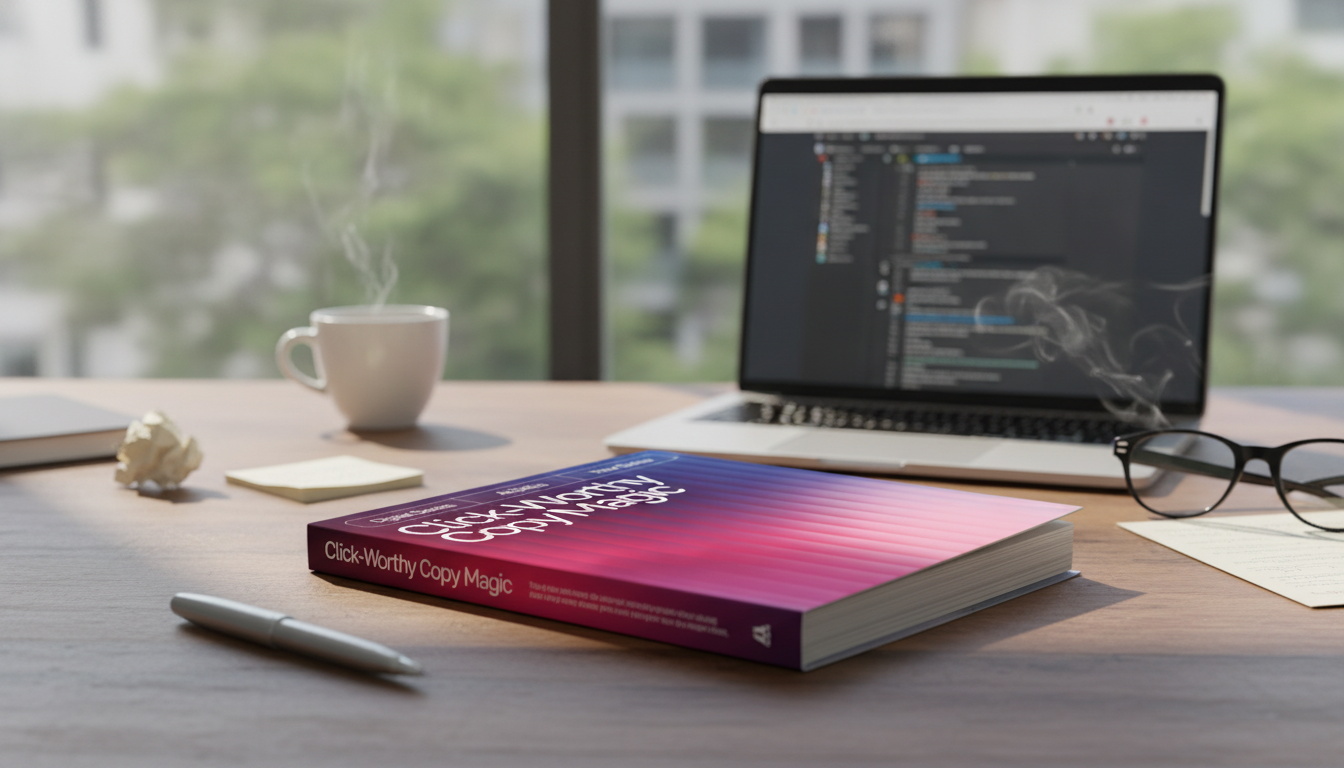
Click-Worthy Copy Magic: Write Better Ads, Headlines, and Campaigns That Convert
Strong ad performance often comes down to a few lines of text: a headline that earns attention, a message that builds desire, and a clear next step. The fastest wins usually come from tightening the offer, choosing one angle, and keeping the promise consistent from ad to landing page. Below are practical copy techniques for quicker ideation, cleaner positioning, and conversion-focused campaigns—plus a streamlined way to polish drafts with AI assistance while staying on-brand.
What Makes Copy “Click-Worthy” (Without Sounding Hypey)
Most paid placements reward clarity over cleverness. At scroll speed, people don’t “figure out” your message—they either get it instantly or move on.
- Attention, relevance, and clarity: Specific benefits (“Cut setup time by 30 minutes”) often outperform vague hype (“Game-changing results”).
- One message per ad: A single, focused claim reduces cognitive load and boosts comprehension.
- The trust stack: Specifics, proof, and a small risk-reversal (guarantee, free preview, cancel anytime) reduce hesitation.
- Match the promise to the landing page: Your ad headline, offer, and above-the-fold section should echo the same outcome using similar language.
This aligns with how people scan web content in fast patterns rather than reading linearly; designing for scanning improves comprehension and follow-through (Nielsen Norman Group).
Start With a Tight Offer: Outcome, Audience, and Angle
A strong offer isn’t “more words.” It’s a clean statement of (1) what changes, (2) who it’s for, and (3) why this is the right approach right now.
- Define the outcome in plain language: time saved, money saved, quality improved, stress reduced.
- Name the audience segment: role, skill level, context, or “problem state.”
- Choose one angle per ad set: speed, simplicity, authority, novelty, savings, or transformation.
- Build a one-sentence value statement: easy to remix into headlines, ad text, and page sections.
Offer-First Draft Builder
| Element | Fill-in | Example |
|---|---|---|
| Audience | Who is this for? | Solo store owners running paid ads |
| Problem | What’s frustrating right now? | Headlines blend in and CPC climbs |
| Outcome | What improves? | More qualified clicks and cleaner conversions |
| Mechanism | How does it happen? | Repeatable writing patterns + fast iteration |
| Proof/Risk reducer | Why believe it now? | Templates, examples, and checklists |
Headline Patterns That Work Across Platforms
Headlines are testable assets. Build a small library of patterns you can rotate across social, search, email, and landing pages.
- Benefit-first: Lead with the result before the method.
- Specificity: Numbers, timeframes, and constraints make claims feel believable.
- Curiosity (with a payoff): Intrigue that still signals relevance.
- Objection-handling: Address the reason people hesitate.
- “For people who…” qualifiers: Improves lead quality by filtering clicks.
Headline Formulas and Quick Examples
| Formula | Best for | Example |
|---|---|---|
| Get [Outcome] Without [Pain] | High-friction offers | Write better ad headlines without sounding salesy |
| [Number] Ways to [Outcome] | Top-of-funnel testing | 7 fast ways to sharpen your next campaign |
| Stop [Bad Outcome]. Try [Better Way] | Problem-aware audiences | Stop wasting clicks—tighten the message first |
| For [Audience]: [Outcome] in [Timeframe] | Niche targeting | For busy creators: stronger copy in 20 minutes |
| The [Tool/Guide] That Helps You [Outcome] | Warm audiences | A practical guide for cleaner, higher-converting ads |
For search, structured testing matters: platforms like Responsive Search Ads reward multiple strong headline variants that still stay on-message (Google Ads Help).
Turn Features Into Benefits People Actually Want
Features describe what something is. Benefits describe what changes for the buyer. To translate cleanly, run a simple ladder:
- What it does: “Includes headline templates.”
- What it changes: “You start drafts faster and avoid blank-page stalling.”
- Why it matters: “You ship more tests, learn quicker, and lower wasted spend.”
Campaign Structure: From Ad to Landing Page to Follow-Up
Simple Campaign Mapping
| Stage | Goal | Copy focus |
|---|---|---|
| Cold ad | Earn attention + qualify | Single benefit + audience cue |
| Landing page | Build trust + explain | Proof, details, and risk reducers |
| Retargeting ad | Reduce hesitation | Objection handling + social proof |
| Follow-up | Close the loop | Recap value + clear next action |
When you test changes, keep it controlled: adjust one variable at a time and track CTR, CPC, and conversion rate together. Platform A/B tools can help keep results clean (Meta Business Help Center).
Use AI Assistance to Improve Drafts (Without Losing Your Voice)
For a ready-to-use system of templates and patterns, the Click-Worthy Copy Magic digital guide is built for fast iteration without sacrificing credibility. To keep your tone consistent across ads, emails, and landing pages, pair it with the AI Tips to Elevate Your Writing Voice tone checklist.
Common Copy Mistakes That Quietly Kill Conversions
A Practical Digital Guide for Better Ads, Headlines, and Campaigns
When speed matters, frameworks beat guesswork. The Click-Worthy Copy Magic digital guide is designed for quick wins: reusable templates, examples, and patterns that help you generate multiple angles fast—then refine to the clearest, most credible version. For creators and small teams, combining it with the AI Tips to Elevate Your Writing Voice tone checklist helps keep your brand voice steady while you test new messages.
FAQ
Does this work for Facebook, Instagram, TikTok, Google, and email?
Yes. The same core message can be adapted into each channel’s format—short hooks and primary text for social, intent-matched headlines for search, and benefit-plus-proof sequences for email—without changing the underlying promise.
Can beginners use this even without a marketing background?
Yes. Step-by-step patterns, checklists, and fill-in frameworks reduce blank-page anxiety and keep writing focused on outcomes, proof, and a clear next step.
How quickly can copy improvements show up in results?
Meaningful changes can appear within a few test cycles, especially when you run controlled A/B tests and change one variable at a time. Watch click-through rate, cost per click, and conversion rate together to confirm the improvement is real.














Leave a comment