AI Wind-Down Checklist to Fall Asleep Faster Tonight
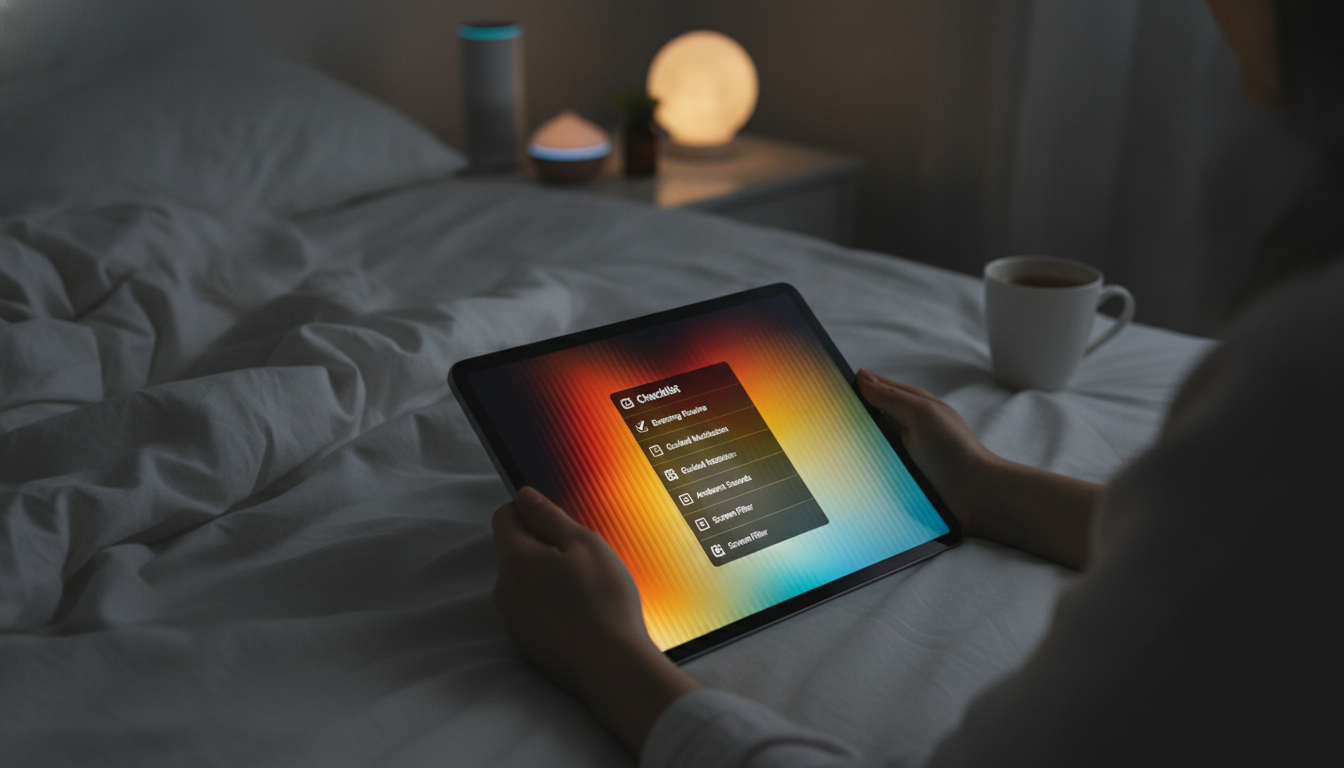
Fall Asleep Faster with AI: A Simple Digital Checklist for Restful Nights and Calm Mornings
Racing thoughts, inconsistent routines, and late-night screen time can quietly derail sleep. A structured, repeatable wind-down plan makes it easier to signal “sleep time” to the body. This digital checklist pairs practical sleep hygiene steps with AI-guided personalization so the routine fits real schedules, stress levels, and morning obligations—without turning bedtime into another complicated project.
Why falling asleep can feel harder than it should
Sleep often gets framed as something that should “just happen,” but modern life nudges the brain in the opposite direction. When bedtime arrives, your body may be tired while your mind stays switched on.
- Cognitive overload: unfinished tasks and worry loops keep the brain in “problem-solving mode.”
- Light and stimulation: bright screens, noisy environments, and late-night scrolling delay natural sleepiness.
- Irregular timing: shifting bed/wake times weaken the body’s internal clock signals.
- Too much effort at bedtime: trying to “force sleep” can increase alertness and frustration.
- Environmental friction: room temperature, bedding comfort, and small disturbances add up.
That’s why a simple sequence—done the same way most nights—can help more than chasing a “perfect” bedtime. For foundational guidance, see sleep hygiene recommendations from the Sleep Foundation and the CDC.
What an AI-assisted sleep checklist actually does
An AI-assisted checklist isn’t about optimizing every minute of your evening. It’s about making the wind-down routine easier to repeat—especially on nights when motivation is low or stress is high.
- Turns a vague goal (“sleep earlier”) into a clear sequence of small actions that are easy to repeat.
- Adapts the routine to personal constraints (shift work, caregiving, early workouts, anxiety spikes).
- Creates a consistent pre-sleep rhythm: the same cues at the same times help the brain anticipate sleep.
- Helps reduce decision fatigue by pre-selecting options for busy or low-energy evenings.
- Encourages gentle troubleshooting by tracking what changed on good vs. rough nights.
Common sleep obstacles and checklist-friendly fixes
| Obstacle | What to adjust tonight | AI personalization idea |
|---|---|---|
| Racing thoughts | 2-minute brain-dump + set a “tomorrow list” | Ask for a 5-bullet worry-to-action conversion plan |
| Late screen time | Set a hard “screens-off” cue + swap to audio/reading | Ask for screen-free wind-down alternatives based on interests |
| Caffeine timing | Move last caffeine earlier; hydrate earlier | Ask for a cutoff time based on bedtime and sensitivity |
| Temperature discomfort | Cool room slightly; choose lighter bedding | Ask for an ideal temp range and bedding tweaks by climate |
| Inconsistent schedule | Pick a stable wake time; keep bedtime flexible | Ask for a 7-day stabilization plan with realistic steps |
How to use the checklist in a 30–60 minute wind-down window
The goal is a predictable glide path into sleep—not a long routine that collapses the moment life gets busy. A 30–60 minute window is enough for most people to reduce stimulation, offload mental clutter, and create a few consistent cues.
- Choose a start time: treat it like an appointment—same time most nights.
- Do a quick environment reset: dim lights, silence non-urgent notifications, and set room comfort.
- Run the “mind offload” step: brief journaling, to-do capture, or a short gratitude list.
- Use a calming transition activity: gentle stretching, reading, a warm shower, or breathing exercises.
- Keep the final 10 minutes consistent: same order of steps (lights, water, bathroom, bed).
- If sleep doesn’t come quickly: switch to a low-stimulation activity and return to bed when sleepy.
Consistency matters more than intensity. When the routine is repeatable, your brain starts recognizing the pattern as a reliable “power down” signal.
A calm-morning setup that starts the night before
Bedtime anxiety often comes from the next day: what you might forget, how rushed it’ll feel, or how many decisions will hit you before coffee. A quick “tomorrow setup” reduces that background pressure and can make it easier to fall asleep.
Simple personalization ideas to ask AI for (without overthinking it)
Digital checklist: what’s included and who it’s for
Featured digital downloads
- Fall Asleep Faster with AI digital checklist (digital download)
- AI-Powered Weekly Meal Ideas (useful for simplifying evenings and reducing last-minute decisions that push bedtime later)
- AI Tips to Elevate Your Writing Voice (helpful if late-night “one more email” or creative spirals keep your mind switched on—set boundaries and wrap work earlier)
If sleep problems are persistent, severe, or paired with symptoms like loud snoring/gasping, consider professional guidance. For an overview of insomnia and care options, visit the National Heart, Lung, and Blood Institute.
FAQ
Does an AI-based checklist replace medical advice for insomnia?
No. An AI-based checklist is a habit-and-routine tool that can support better sleep consistency, but it doesn’t diagnose or treat medical conditions. If insomnia persists, or if there are concerns like sleep apnea or severe anxiety/depression symptoms, a clinician can help evaluate next steps.
How long does it take to notice results from a consistent wind-down routine?
Some people feel small improvements within a few nights, especially with reduced evening stimulation and a stable wake time. More lasting rhythm-building often takes 1–2 weeks of consistency, with gradual adjustments that are easy to maintain.
What if the checklist feels like “another task” at night?
Use a minimum version (5–10 minutes) focused on a few high-impact steps like dimming lights and doing a short brain-dump. Pre-select the steps earlier in the day so nights feel simpler, not more demanding.















Leave a comment