AI-Guided Meditation: Personalized Sessions for Calm & Focus
What AI-Guided Meditation Is (and What It Isn’t)
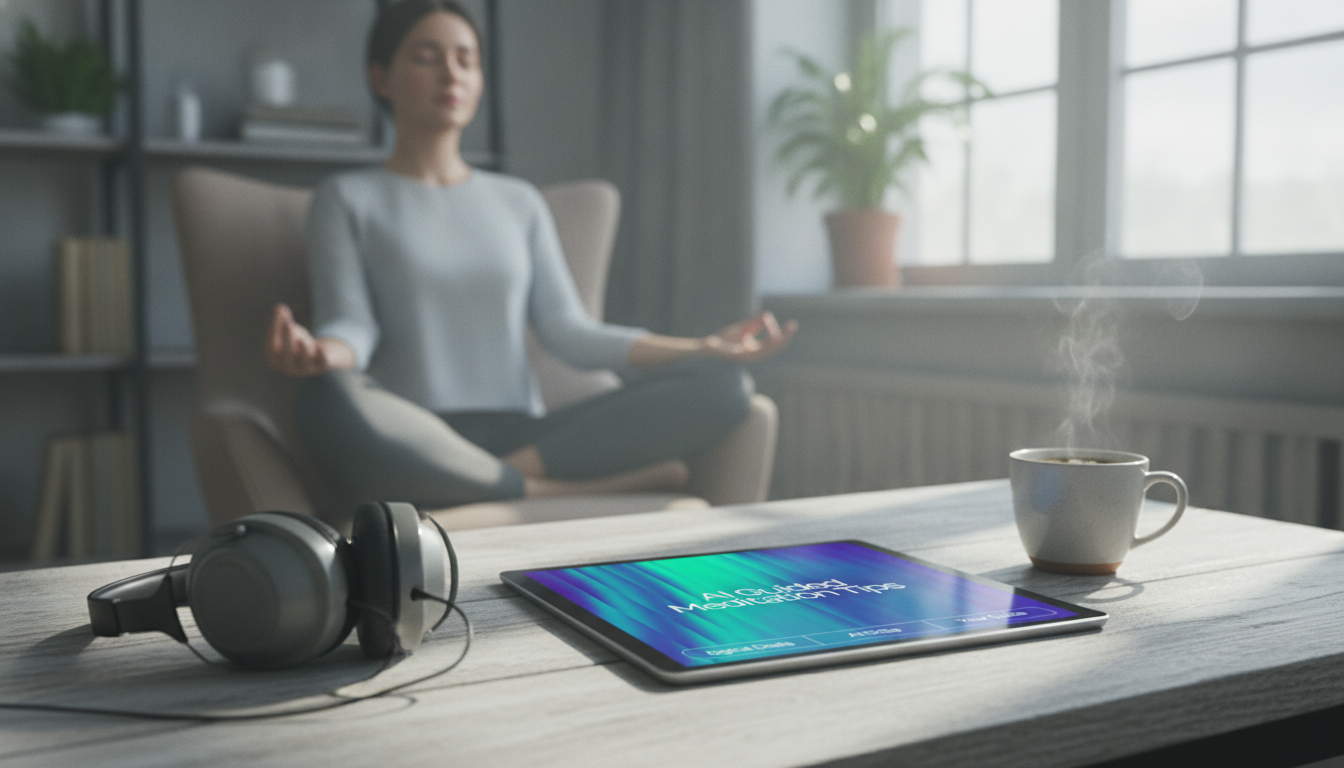
AI-guided meditation is a practical way to turn a few personal details—how much time you have, how you feel right now, what you want to shift, and what tone you prefer—into a simple session you can actually follow. Instead of staring at a blank page (or scrolling endlessly for the “perfect” track), you get a clear structure: set an intention, settle the body, use an anchor (often breath), notice distractions, and close gently so you can re-enter your day.
It’s also important to keep boundaries clear. AI guidance isn’t medical care, therapy, or crisis support. It can be a helpful planning and coaching tool for everyday mindfulness, but it shouldn’t replace professional help for persistent insomnia, severe anxiety, depression, panic, or intrusive thoughts. For an evidence-based overview of mindfulness and meditation, visit the National Center for Complementary and Integrative Health (NCCIH) or the American Psychological Association (APA) mindfulness topic page.
Where AI-guided meditation shines: beginners who want step-by-step structure, busy schedules that need flexible session lengths, and creators developing scripts, audio tracks, or wellness content that people will finish.
Set Up a Practice That Actually Sticks
Consistency beats intensity. Start with a “minimum session” that feels almost too easy to skip—2 to 5 minutes—and pair it with a “bonus session” of 10 to 20 minutes for days when you have more capacity. This reduces all-or-nothing thinking and makes it easier to keep momentum.
- Use a reliable cue: same chair, same time window, or the same pre-meditation action (tea, two gentle stretches, dimming lights).
- Pick one anchor for week one: breath, sound, or body sensations. Keep it simple before adding visualization or affirmations.
- Track only one metric for two weeks: minutes practiced or number of sessions. Less data often means less overwhelm.
Personalize Your Sessions with Better Inputs
Better personalization starts with better inputs. Four details are usually enough to generate a session that fits your day:
- Session length: 3 minutes, 8 minutes, 15 minutes, etc.
- Current emotional state: anxious, flat, overstimulated, irritated, foggy, tender.
- Desired outcome: calm, focus, sleep, grounding, emotional reset.
- Preferred tone: gentle, direct, secular, spiritual, minimalist.
To make guidance feel even more “you,” add context like energy level, time of day, and whether you want silence, soft music, or nature sounds. Constraints keep it realistic and comfortable: “no breath holds,” “seated only,” “no spiritual language,” or “include a closing journaling question.”
For the clearest results, keep your personalization stable for a week, then change only one variable at a time (length or tone or technique) so you can tell what actually helped.
Session Blueprints for Common Goals
These blueprints are designed to be easy to follow and easy to adapt. Read them once, then use them as a repeatable template.
Quick calm (3–5 minutes)
30 seconds settling → 2 minutes slow exhale emphasis (comfortable pace) → 60 seconds light body scan → 30 seconds gratitude close.
Focus reset (5–10 minutes)
Posture check + breath counting → notice distractions → label “thinking” → return to count → set one intention for the next task.
Stress release (10–15 minutes)
Longer body scan + gentle tension/relax cycles (shoulders, jaw, hands) → add compassionate self-talk to soften self-criticism → close with one doable next step.
Sleep wind-down (8–15 minutes)
Pick a Session Style Based on How You Feel Right Now
| Current state | Best technique | Suggested length | Simple closing line |
|---|---|---|---|
| Racing thoughts | Breath counting + labeling | 5–10 min | “Thoughts can pass without being solved.” |
| Tense body | Body scan + relax cycles | 10–15 min | “Softness is allowed here.” |
| Low energy | Open awareness + sound anchor | 5–8 min | “Small attention is enough.” |
| Overstimulated | Minimal cues + longer pauses | 4–7 min | “Less input, more space.” |
| Restless before bed | Heavy-body visualization | 8–15 min | “Rest can begin now.” |
Gentle Scripts You Can Reuse (Beginner-Friendly)
Creator Corner: Turning Guidance Into Content People Will Finish
Safety, Boundaries, and When to Get Extra Support
Meditation can support wellbeing, but it isn’t a substitute for professional care. Seek qualified help for persistent insomnia, severe anxiety, depression, or intrusive thoughts. For a plain-language overview of meditation for stress, see NIH News in Health.
A Ready-to-Use Digital Guide for Personalized Meditation Ideas
If you like the simplicity of templates, a compact digital resource can speed up routine-building with repeatable session formats, mood-based variations, and creator-friendly phrasing you can adapt. A helpful option is the AI Guided Meditation Tips digital guide, designed for mindful beginners and creators who want personalized session ideas without overcomplicating the process.
Pair It with Complementary Digital Tools
- Better sleep support: use a short wind-down checklist to reduce nighttime scrolling and cue rest with Fall Asleep Faster with AI checklist.
- Wellness planning: reduce decision fatigue by pairing mindfulness with simple weekly routines using AI-Powered Weekly Meal Ideas eBook.
- Creator support: keep a calm, consistent narration style across scripts with AI Tips to Elevate Your Writing Voice checklist.
FAQ
How long should an AI-guided meditation be for a complete beginner?
Start with 2–5 minutes daily for the first week, using a single anchor like breath or sound. Once that feels steady, move up to 8–12 minutes while keeping the routine consistent.
Can AI-guided meditation help with sleep?
It can support a relaxing bedtime routine by using slower pacing, gentle body relaxation, and reduced stimulation (dim lights, no breath holds, soft imagery). It isn’t a medical treatment for chronic insomnia, so ongoing sleep problems deserve professional support.
What information should be included to get a more personalized session?
Include time available, mood, goal (calm/focus/sleep/grounding), energy level, preferred tone, triggers to avoid, posture preference (seated/lying), and whether you want journaling prompts or affirmations at the end.











Leave a comment