AI Sleep Tracking: Read Your Data and Sleep Better
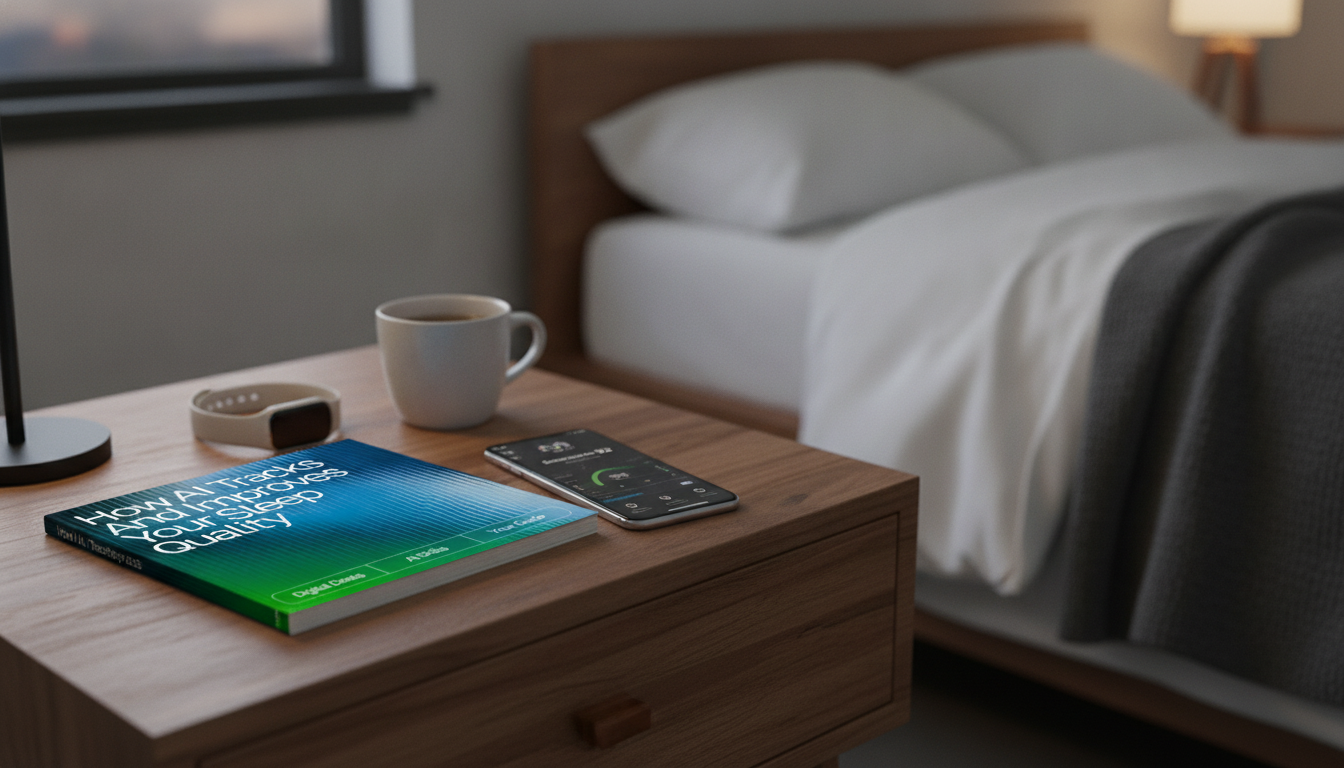
How AI Sleep Tracking Works—and How to Turn the Data Into Better Nights
AI-driven sleep tracking can turn nightly signals—movement, heart rate patterns, breathing trends, and routine cues—into clear insights about sleep stages, consistency, and recovery. With the right setup and interpretation, these tools can guide practical changes such as adjusting bedtime, light exposure, caffeine timing, bedroom temperature, and wind-down routines to improve sleep quality over time.
What an AI sleep tracker measures (and what it can’t)
Most consumer sleep trackers don’t “see” sleep directly. Instead, they collect signals that correlate with sleep and use algorithms to estimate what likely happened overnight.
- Common signals: accelerometer movement, heart rate and heart rate variability (HRV), skin temperature trends, breathing rate, and (on some devices) ambient factors like light and noise.
- How AI uses patterns: models compare nightly signals to your personal baseline, then estimate sleep stages, awakenings, and recovery metrics.
- What’s usually estimated vs. measured: consumer devices infer sleep stages; they do not directly record brain waves like clinical polysomnography.
- Why trends matter more than one night: a single score can be noisy; multi-week patterns reveal what actually moves the needle.
- When tracking can mislead: illness, alcohol, new medications, travel, and device fit can skew readings—context notes help.
Sleep metrics AI commonly reports and how to use them
| Metric | What it reflects | What to try if it’s off |
|---|---|---|
| Total sleep time | Time asleep across the night | Set a consistent wake time; move bedtime earlier in 15–30 minute steps |
| Sleep efficiency | Percent of time in bed spent asleep | Reduce time in bed awake; tighten bedtime window; improve wind-down routine |
| Sleep onset latency | How long it takes to fall asleep | Dim lights 60–90 minutes before bed; reduce late caffeine; add a calming pre-sleep ritual |
| Wake after sleep onset (WASO) | Time awake during the night | Check room temperature, alcohol timing, stress, and late meals; evaluate snoring or breathing concerns |
| HRV trend | Recovery and nervous system balance | Prioritize consistent sleep, hydration, and lighter evening workouts; reduce alcohol |
| Resting heart rate | Baseline strain and recovery | Review training load, illness signs, late-night eating, and bedtime stressors |
| Estimated sleep stages | Patterns of light/deep/REM based on signals | Use as directional feedback; focus on consistent schedule and morning light exposure |
How AI turns raw signals into “sleep quality”
- Baseline building: the first 1–2 weeks often calibrate personal norms; early results can swing more than later ones.
- Feature extraction: the system identifies repeating patterns—micro-movements, heart rate dips, breathing regularity, and timing rhythms.
- Stage estimation: algorithms map signal patterns to probabilities of sleep stages and transitions rather than definitive labels.
- Scoring logic: many trackers combine duration, continuity, stage distribution, and recovery markers into a single score—use it as a summary, not a diagnosis.
- Personalization loop: as habits change (exercise, bedtime, alcohol, stress), AI can adapt recommendations and highlight what correlates with better nights.
For foundational sleep science and why sleep matters, the National Institute of Neurological Disorders and Stroke and the CDC offer helpful overviews.
Setup that improves accuracy on night one
- Device fit and placement: wearables should be snug but comfortable; ring sensors need proper sizing; under-mattress sensors need stable positioning.
- Consistency: track at least 10–14 nights before drawing conclusions; keep wake time stable to strengthen comparisons.
- Add context tags: log alcohol, late caffeine, naps, workouts, heavy meals, travel, and illness to connect cause and effect.
- Bedroom basics: cooler temperature, reduced light, and minimized noise improve both sleep and the clarity of signals.
- Privacy check: review what data is stored, whether it’s shared, and what can be deleted or exported.
Reading your dashboard: what to prioritize first
- Start with schedule regularity: bedtime and wake time consistency often produces the fastest improvements in sleep continuity.
- Fix the biggest leak: choose one metric that’s most off (long sleep latency, high WASO, short total sleep) and test one change for 7 nights.
- Look for repeating triggers: compare good nights vs. bad nights by time of last caffeine, alcohol amount, workout intensity, and dinner timing.
- Use ranges, not perfection: aim for steady trends and fewer outliers rather than chasing an ideal stage chart.
- Spot red flags: persistent very short sleep, loud snoring, gasping, or extreme daytime sleepiness should be discussed with a clinician.
If you’re dealing with ongoing sleep deprivation or daytime impairment, guidance from the National Heart, Lung, and Blood Institute can help you understand risks and next steps.
Practical experiments AI can help you run (7–14 days each)
AI becomes most useful when it supports small, repeatable experiments. Keep everything else as stable as possible, then compare weekly averages.
Smarter habits guided by AI insights
A guided approach to learning AI sleep tracking
- How AI Tracks and Improves Your Sleep Quality (Digital eBook)
- Fall Asleep Faster with AI (Digital Checklist)
- AI-Powered Weekly Meal Ideas (Digital eBook)
FAQ
Can AI sleep trackers accurately detect sleep stages?
Consumer devices estimate sleep stages using movement and cardiovascular signals, so they’re best for spotting trends and consistency rather than making clinical claims. Accuracy can drop with poor fit, alcohol, illness, travel, or unusual sleep positions.
How long should sleep data be tracked before making changes?
Track at least 10–14 nights to establish a baseline, then run a single change for 7–14 days so the results are easier to interpret. Weekly averages are usually more reliable than any one night.
What’s the most effective metric to improve first?
Schedule consistency and total sleep time tend to deliver the fastest wins for many people. If one issue stands out—like long sleep onset latency or frequent awakenings—target that with one focused experiment at a time.














Leave a comment