20-Minute Mindful Morning Routine (With Light AI Help)
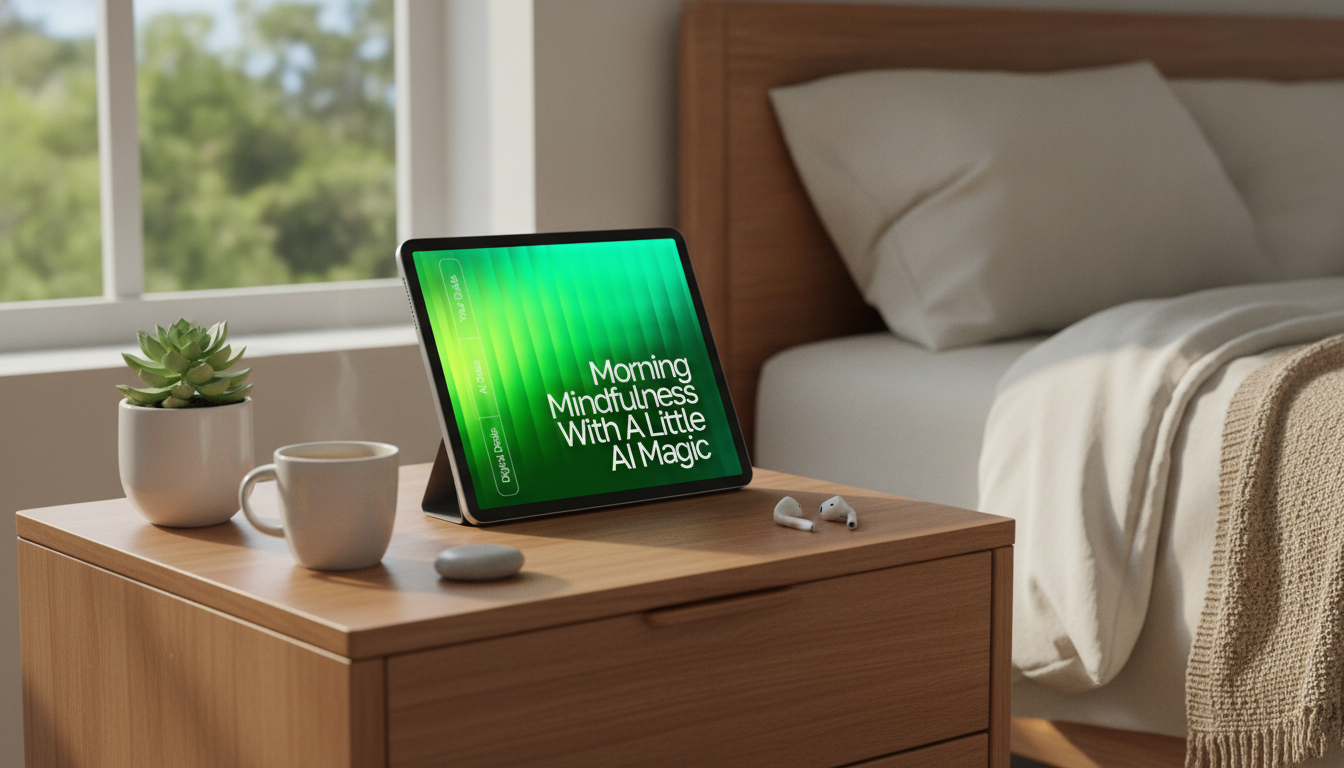
Morning Mindfulness with a Little AI Magic: A Stress-Free Start for Intentional Living
A calm morning doesn’t require a complete lifestyle overhaul—just a few repeatable steps that reduce decision fatigue and bring attention back to the present. A mindful routine paired with light, supportive AI tools can make it easier to choose what matters first: steady breathing, clear priorities, and a kinder pace. This guide breaks down a simple morning flow, shows where AI can help without taking over, and offers an easy way to turn “good intentions” into a routine that sticks.
What a mindful morning actually looks like
Mindfulness in the morning isn’t about forcing your mind to be blank or “positive.” It’s about noticing what’s already here—your breath, body sensations, and thoughts—without immediately reacting to them. That small pause is often where stress softens.
The most helpful routine is usually short and consistent. Intensity matters less than repeatability, especially when life includes work deadlines, caregiving, or school drop-offs. The goal is not perfect calm; it’s a steadier baseline you can carry into the rest of the day.
Start by choosing one anchor habit and building around it. Your anchor can be:
- Breathing (a few slow, counted breaths)
- Stretching (a tiny mobility flow)
- Journaling (a quick check-in)
- Quiet tea or coffee (one cup, no multitasking for a minute)
When the anchor is stable, everything else becomes optional add-ons rather than pressure.
A 20-minute routine that reduces stress without rushing
This routine is designed to feel doable on weekdays. It’s also flexible: if you only have 8 minutes, take the first 2 minutes plus one other block and call it a win.
Minute-by-minute flow
- Minute 0–2: Arrive—sit up, place feet on the floor, and take 5 slow breaths to signal “start.”
- Minute 2–7: Gentle body wake-up—neck rolls, shoulder circles, or a short mobility flow to release overnight stiffness.
- Minute 7–12: Mindful focus—choose one: breath counting, a brief gratitude list, or a grounding 5-4-3-2-1 check-in.
- Minute 12–17: Intentional plan—pick 1 priority task and 1 supportive task (something that makes the day easier).
- Minute 17–20: Transition—light, simple action (water, wash face, open curtains) to carry the calm into movement.
| Time | Practice | Purpose | Keep it simple by… |
|---|---|---|---|
| 0–2 min | 5 slow breaths | Shift from autopilot to awareness | Counting inhales/exhales to 5 |
| 2–7 min | Gentle stretch or mobility | Release tension, wake the body | Choosing 3 moves only |
| 7–12 min | Grounding or gratitude | Stabilize attention, lift mood | Writing 3 bullet points |
| 12–17 min | 1 priority + 1 support task | Reduce decision fatigue | Limiting to two tasks |
| 17–20 min | Transition ritual | Make calm actionable | Drinking water and opening curtains |
If you want a quick, credible overview of how mindfulness supports stress management, the American Psychological Association’s mindfulness meditation resource is a helpful starting point. For safety and effectiveness considerations, the National Center for Complementary and Integrative Health also provides a grounded summary.
Where a little AI helps (and where it shouldn’t)
AI can be useful in the background—like setting out your yoga mat the night before—but it shouldn’t become the main event. The sweet spot is using AI for structure, not for emotional authority.
Helpful uses
- Generating a short morning check-in script you can reuse.
- Suggesting a simple 3-item gratitude prompt when your brain feels foggy.
- Creating a morning checklist tailored to your schedule constraints (for example: “quiet routine before kids wake” vs. “commute in 25 minutes”).
Where it shouldn’t step in
- As the “final word” on emotions, health concerns, or major decisions.
- As endless content to consume (more inputs often create more stress).
Simple boundaries that keep it supportive
- Avoid sharing sensitive personal data; keep reflections general.
- Store private journaling locally when possible.
- Use AI to reduce friction, then stop and do the practice (breathe, stretch, sit quietly).
Turn the routine into something that sticks
Consistency grows from smart design, not perfect motivation. Make the routine easier to start than to skip.
For broader, practical tips on dealing with stress, the CDC’s stress coping guidance is a solid reference—especially when you’re building habits during a demanding season.
A simple script for mindful intention-setting
Digital tools that pair well with a calmer morning
-
Morning Mindfulness with a Little AI Magic (digital download)
—A ready-to-repeat guide for building a calm morning flow with light AI support, so you spend less time deciding and more time doing. -
Fall Asleep Faster with AI (restful nights checklist)
—Better mornings often start the night before; a simple checklist can reduce the “tired-but-wired” loop and support calmer wake-ups. -
AI-Powered Weekly Meal Ideas (easy weekly planning eBook)
—Fewer food decisions during the week means less background stress, making it easier to protect your morning routine.
FAQ
How long should a mindful morning routine be to make a difference?
Consistency matters more than duration: 5–20 minutes is enough for most people to feel a steadier start over time. On packed mornings, do a minimum routine (5 slow breaths + one intention) and scale up when you can.
Can AI support mindfulness without making it feel robotic?
Yes—use AI for structure (a short checklist or a few prompts), then keep the actual practice human: breathing, noticing sensations, and allowing silence. Setting boundaries—like limiting personal details and avoiding endless content—helps it stay supportive.
What if mornings are chaotic or start very early?
Use a 2–5 minute version anchored to a cue (alarm, bathroom sink, coffee maker) and prep the night before to remove friction. Micro-practices count, and repeating them trains your nervous system to settle faster.
















Leave a comment