Mindful Tech for Emotional Balance: 7-Minute Check-Ins
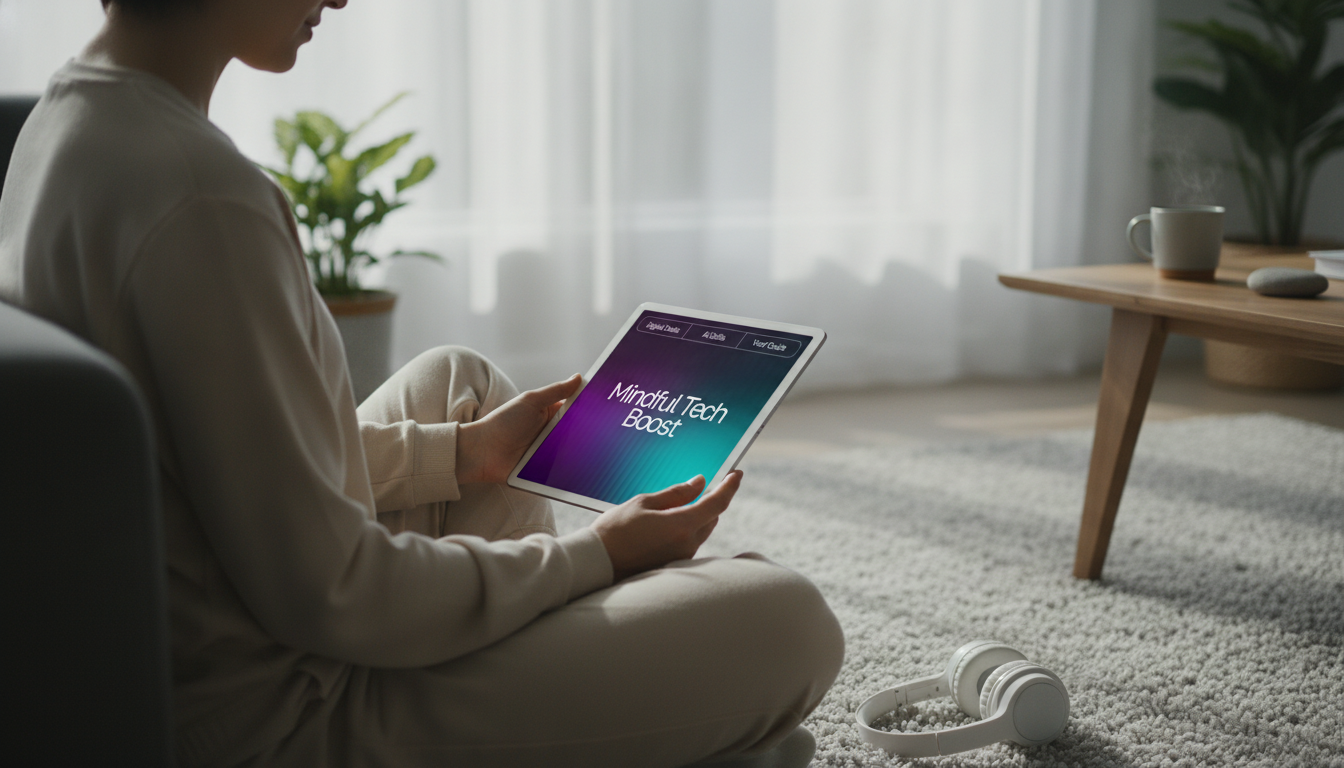
Emotional balance and self-awareness get easier when small check-ins become consistent. A mindful-tech approach keeps the process simple: short routines, clear signals to track, and (when you want it) AI-assisted reflection to spot patterns in mood, stress, sleep, and daily habits—without turning wellness into an all-day project.
What “mindful tech” looks like in real life
Mindful tech isn’t about measuring yourself into perfection. It’s about using tools to notice what’s already happening—then making one small adjustment at a time.
- Use technology to notice patterns, not to judge outcomes.
- Keep tracking lightweight: short check-ins beat long, inconsistent logs.
- Separate data collection (what happened) from interpretation (why it happened).
- Choose 1–2 focus areas at a time (like mood + sleep, or stress + screen time) to avoid overwhelm.
- Set guardrails: choose specific times to review insights so monitoring doesn’t increase anxiety.
A helpful rule: if tracking makes you more tense, scale it down. The goal is clarity, not constant self-surveillance.
A simple daily rhythm for emotional balance
Most people don’t need more “work” added to their day—they need a rhythm that fits into the day they already have. The schedule below stays brief on purpose, so it’s easier to repeat.
- Morning (2 minutes): name your emotional baseline, energy level, and one intention.
- Midday (1 minute): quick stress scan—body tension, breathing pace, and focus level.
- Evening (4 minutes): note peak emotion, most draining moment, most supportive moment, and a small win.
- Weekly (10 minutes): review trends, choose one habit to adjust, and define what “better” means next week.
- Make habits frictionless: attach check-ins to routines you already do (coffee, lunch, brushing teeth).
Daily check-ins: what to track and why it helps
| Moment | Track (1–2 items) | Why it matters | Example note |
|---|---|---|---|
| Morning | Mood (1–10), intention | Sets awareness before the day accelerates | Mood 6/10; intention: slower responses |
| Midday | Stress (1–10), body cue | Catches overload early | Stress 7/10; jaw clenched |
| Evening | Peak emotion, trigger, support | Connects cause and effect for learning | Peak: anxiety; trigger: deadlines; support: walk |
| Weekly | Top pattern, one change | Turns data into one manageable experiment | Late caffeine raises stress next day; move coffee earlier |
Using AI for tracking without losing the human side
AI can make reflection easier, especially when you’re tired and don’t want to “figure yourself out” from scratch. The healthiest way to use it is as a summarizer and pattern-spotter—not an authority.
- Use AI to summarize logs: ask for themes, recurring triggers, and coping strategies that already worked.
- Use AI to reduce decision fatigue: generate a short menu of coping actions matched to time available (1, 5, or 15 minutes).
- Use AI to spot “if-then” patterns: identify what tends to happen after poor sleep, long meetings, or high screen time.
- Keep sensitive details minimal: store private notes offline when possible; avoid entering identifying information.
- Treat outputs as hypotheses, not diagnoses; confirm patterns with lived experience and professional advice when needed.
For context on mental health basics and support options, see National Institute of Mental Health (NIMH) — Caring for Your Mental Health. To understand how stress shows up physically, American Psychological Association — Stress effects on the body is a practical reference.
Emotional balance skills that pair well with tech support
Tech works best when it supports real emotional skills. The simplest practices are often the most reliable—especially on busy days.
- Name the emotion precisely: “overwhelmed” vs “bad” improves clarity and next steps.
- Track body signals: headaches, stomach tension, restless legs, shallow breathing, and jaw clenching can be early indicators.
- Use micro-regulation tools: longer-exhale breathing, brief stretching, or a 2-minute walk to interrupt stress spirals.
- Create a “support stack”: 3 fast actions (2 minutes), 3 medium (10 minutes), 3 deeper (30 minutes) so there’s always an option.
- Practice self-awareness without self-criticism: shift from “What’s wrong with me?” to “What’s happening, and what do I need?”
Turning insights into healthier daily habits
Insights are only useful when they change what happens next. Keep behavior change small enough that it’s repeatable, then evaluate results like a simple weekly experiment.
Mindful Tech Boost: what the digital guide helps you set up
If you want a ready-made structure (instead of piecing routines together), Mindful Tech Boost digital guide focuses on short, repeatable check-ins and practical AI-supported reviews—so tracking stays useful, not consuming.
- Fall Asleep Faster with AI checklist for calmer nights and more consistent mornings.
- AI-Powered Weekly Meal Ideas eBook to reduce food decision fatigue and support steadier energy.
Who it’s best for (and when to seek extra support)
| Situation | How the guide can help | Consider additional support when |
|---|---|---|
| Busy schedule, inconsistent self-care | Creates small, repeatable check-ins | Daily functioning is significantly impaired for weeks |
| Stress spikes and unclear triggers | Highlights patterns and early warning signals | Panic symptoms, severe insomnia, or thoughts of self-harm occur |
| Difficulty sticking to habits | Uses one-change-per-week habit experiments | Substance use increases or coping feels out of control |
Common pitfalls and how to avoid them
FAQ
Is AI tracking a substitute for therapy or medical care?
No. AI-assisted tracking can support awareness and habit-building, but it doesn’t diagnose conditions or replace professional care; seek a clinician if symptoms are severe, persistent, or feel unsafe.
What should be tracked for mental wellness without feeling overwhelmed?
Pick 2–4 simple signals (like mood, stress, sleep quality, and one daily habit) and keep check-ins brief. Consistency matters more than detail when you’re trying to see patterns.
How can privacy be protected when using AI for wellness notes?
Keep identifying details out of entries, store sensitive notes offline when possible, and avoid using shared accounts for personal logs. Review the platform’s data settings so you understand what’s stored and for how long.













Leave a comment