Path to Calm: 4-in-1 Anxiety Relief Bundle Toolkit
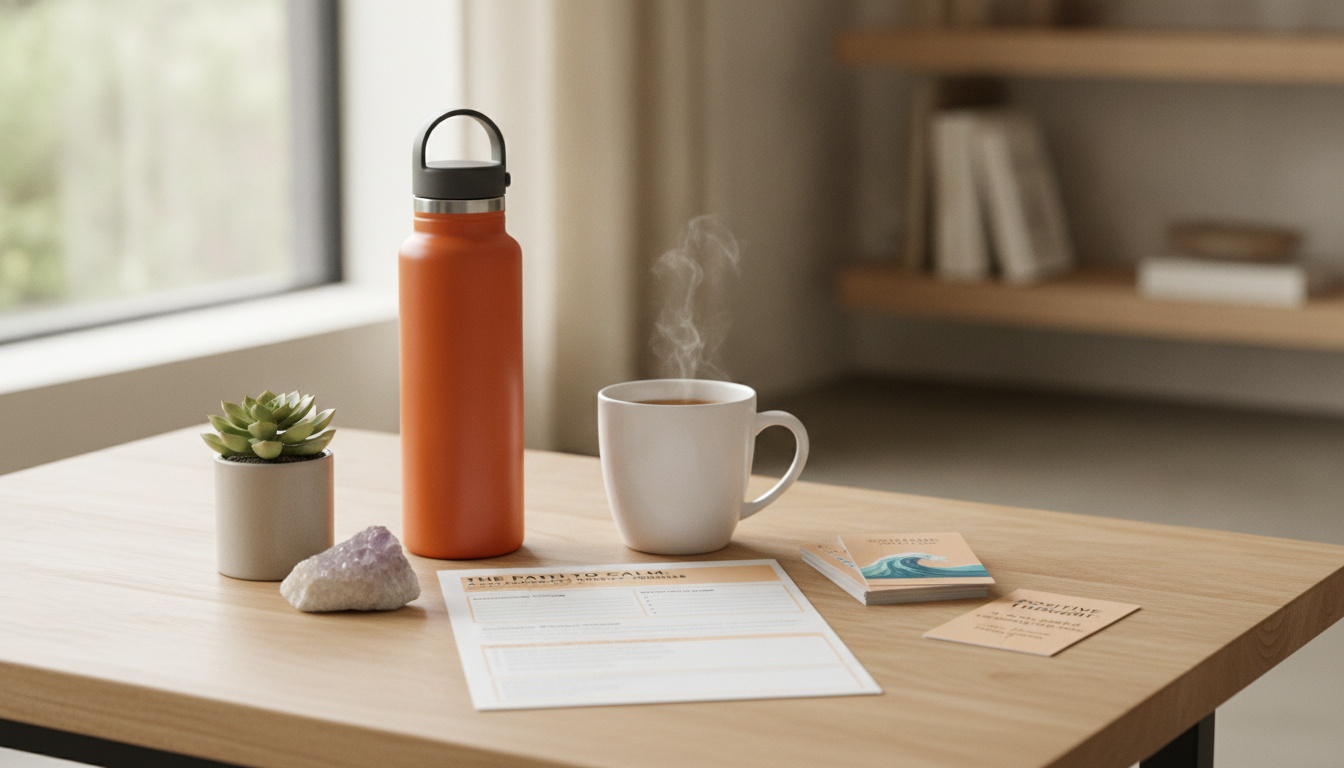
The Anxiety Relief Bundle: A Path to Calm — A 4-in-1 Toolkit for Steadier Days
Anxiety can show up as racing thoughts, tension in the body, restlessness, or constant “what if” loops. A consistent, simple routine often helps more than occasional deep dives. The Anxiety Relief Bundle: A Path to Calm brings four practical tools together—mindfulness exercises, positive thinking prompts, a printable checklist, and a course outline—so it’s easier to build calming habits that fit real-life schedules.
If you’re looking for a guided way to practice calm day by day, explore The Anxiety Relief Bundle: A Path to Calm (4-in-1 Bundle) and use it as a steady foundation you can return to when life gets noisy.
What’s inside the 4-in-1 bundle
This bundle is designed to be practical, repeatable, and flexible—so you can use it in short sessions without needing a perfect schedule.
- Mindfulness exercises designed to shift attention back to the present moment and ease physical stress responses
- Positive thinking materials that help reframe unhelpful thought patterns into more balanced perspectives
- A printable checklist to turn calming practices into a repeatable daily or weekly routine
- A course outline that organizes the tools into a step-by-step structure for steady progress
For background on anxiety symptoms and treatment approaches, the National Institute of Mental Health (NIMH) is a helpful, reputable starting point.
Who this bundle can help most
- People who want a structured way to practice calm without guessing what to do next
- Anyone managing daily stress, worry spirals, or overthinking that disrupts focus
- Busy schedules that benefit from short, repeatable practices instead of long sessions
- Those who like printable resources they can keep visible on a desk, fridge, or planner
- Beginners who want gentle guidance rather than complex theory
How mindfulness exercises support calm
Mindfulness isn’t about “clearing your mind.” It’s about training attention so thoughts don’t automatically drive your body into a stress response. When practiced consistently—even in small doses—mindfulness can make anxious moments feel less sticky and more manageable.
- Uses attention training to reduce getting “hooked” by anxious thoughts
- Encourages noticing body cues (breath, tension, posture) and responding earlier
- Builds the skill of pausing before reacting—useful during stress triggers
- Works well in short bursts (1–10 minutes) when practiced consistently
The American Psychological Association (APA) explains how mindfulness supports well-being and why it’s often used as a skills-based approach to stress and worry.
Positive thinking that stays realistic (not forced)
Realistic positive thinking is less about repeating upbeat phrases and more about reducing mental distortion. It helps you move from “This is a disaster” to “This is hard, and I have options.” That shift can calm the nervous system because the brain stops treating every uncertainty like an emergency.
- Shifts from worst-case assumptions to evidence-based, balanced alternatives
- Helps name common thinking traps (catastrophizing, mind-reading, all-or-nothing) and replace them with steadier thoughts
- Pairs well with journaling or quick note-taking after stressful moments
- Focuses on self-talk that is supportive and believable, not overly cheerful or dismissive
Example reframe: “If I mess up this meeting, I’ll get fired” becomes “I’m nervous because I care; I can prepare a few key points, and one imperfect moment won’t define my work.” The goal is balance—enough truth to feel believable, enough perspective to reduce panic.
The printable checklist: turning tools into a routine
When anxiety rises, decision-making often drops. A checklist acts like a pre-made path: instead of searching for the “perfect” fix, you choose one small next step that supports regulation.
- Creates a simple “default plan” for mornings, midday resets, and evenings
- Reduces decision fatigue by listing the next best action when stress rises
- Supports habit-building by tracking consistency and noticing what helps most
- Works as a personal menu: choose one small practice instead of trying to fix everything at once
| Time | Practice | Goal | Approx. time |
|---|---|---|---|
| Morning | Mindfulness breath check + intention | Start the day grounded | 3–5 min |
| Midday | Checklist “reset” item (stretch, hydration, short scan) | Lower tension and mental overload | 2–7 min |
| After a trigger | Positive thinking prompt (balanced reframe) | Reduce worry spiral, regain clarity | 5–10 min |
| Evening | Mindfulness body scan + reflection note | Ease into rest and recovery | 5–12 min |
If nighttime anxiety or a “tired but wired” feeling is part of your pattern, pairing this bundle with a sleep-focused routine can help reinforce calm at the end of the day. Consider Fall Asleep Faster with AI (Digital Checklist) as an add-on for evening structure.
Using the course outline to stay consistent
How to get the most from the bundle (a simple plan)
For a general overview of anxiety and self-help approaches, the NHS guide to anxiety offers clear explanations and practical next steps.
When to seek additional support
FAQ
How quickly can mindfulness exercises reduce anxiety?
Some people feel a noticeable shift within a few minutes, especially with breathing or body-scan practices. More lasting change typically comes from short daily practice over a few weeks, where consistency matters more than session length.
Is positive thinking the same as ignoring problems?
No—realistic positive thinking is about balanced, evidence-based reframing rather than denial. For example, “Everything will fall apart” can become “This is stressful, but I can take one step now and ask for help if I need it.”
What should be printed and how should it be used day to day?
Print the checklist first, and optionally print any prompt pages you’ll use most often. Keep them where stress tends to show up (desk, planner, bedside) and use the checklist as a quick “next step” guide when you feel tension rising.














Leave a comment