Safe & Ethical AI Tools for Beginners: Practical Checklist
A Practical Guide to Using AI Tools Safely and Ethically (Beginner Digital Download)
AI tools can save time and spark ideas, but they also introduce real risks—privacy leaks, copyrighted content issues, biased outputs, and overreliance on unverified answers. This beginner-friendly guide breaks AI use into clear, practical habits so everyday tasks stay helpful, lawful, and respectful to others while protecting personal data and reputation.
What “safe” and “ethical” AI use looks like in everyday life
“Safe” AI use is about protecting personal data, accounts, devices, and sensitive business information while interacting with AI systems. “Ethical” AI use is about fairness, transparency, respect for creators, and responsible decision-making when AI influences real people.
Common beginner pitfalls include pasting confidential text into chat tools, treating outputs as facts, copying generated content without checking rights, and using AI to impersonate others. A simple guiding rule that prevents most headaches: share less, verify more, and document decisions when AI affects other people.
Start with data protection: what not to paste into an AI tool
As a baseline, avoid entering passwords, authentication codes, banking details, full legal names tied to identifiers, medical information, client contracts, private messages, and unpublished business plans. Even if a tool feels “private,” treat any text entered as potentially stored, reviewed for quality, or used to improve systems depending on settings and provider policies.
When you do need help with sensitive work, anonymize. Replace names with roles (Client A), remove addresses, and summarize sensitive documents rather than uploading them. If you’re choosing between tools, prefer ones with clear data controls (opt-out options, retention limits, enterprise privacy terms) and keep a record of the settings you selected.
Quick privacy filter for common inputs
| Input type | Risk level | Safer alternative |
|---|---|---|
| Personal identifiers (full name + address/ID) | High | Use placeholders and general location (city only) |
| Client emails, DMs, or support tickets | High | Summarize the issue; remove names and order numbers |
| Internal business docs (pricing, strategy, contracts) | High | Extract non-sensitive bullet points; omit numbers and clauses |
| Publicly available text (published posts, press releases) | Low | Link or quote only what is already public |
| Creative drafts not yet published | Medium | Share a short excerpt; keep full manuscript offline |
Verify before using: accuracy, bias, and “confidently wrong” answers
AI output can be fluent and still be incorrect, incomplete, or outdated—especially on legal, medical, or financial topics. Treat AI as a drafting and thinking partner, not a final authority.
A practical verification routine: (1) identify what claims need proof, (2) check primary sources when possible, (3) cross-check with at least two reputable references, and (4) validate numbers, dates, and citations rather than trusting them at face value. For high-impact decisions, use AI to generate questions and options, then confirm the final answer with trustworthy sources and human judgment. Frameworks like the NIST AI Risk Management Framework can help you think clearly about risk levels and controls.
Also watch for bias. Outputs may reflect stereotypes or underrepresent groups depending on training data. Use neutral, inclusive phrasing, ask for alternatives, and compare results across tools when the stakes are high (hiring, eligibility decisions, or public-facing claims). The OECD AI Principles are a solid reference point for fairness and responsible use.
Respect creators: copyright, attribution, and originality
When using AI for summaries or research notes, keep citations to the original sources and avoid presenting paraphrases as independent reporting. For commercial use (blogs, ads, products), run originality checks, keep drafts and edits, and store source links used during research. If you’re advertising, be especially careful that claims are truthful and substantiated; the FTC’s guidance on AI and truthfulness in advertising is worth reviewing.
Be transparent: when to disclose AI assistance
Set up guardrails: a beginner-friendly routine that prevents most mistakes
Before
During
After
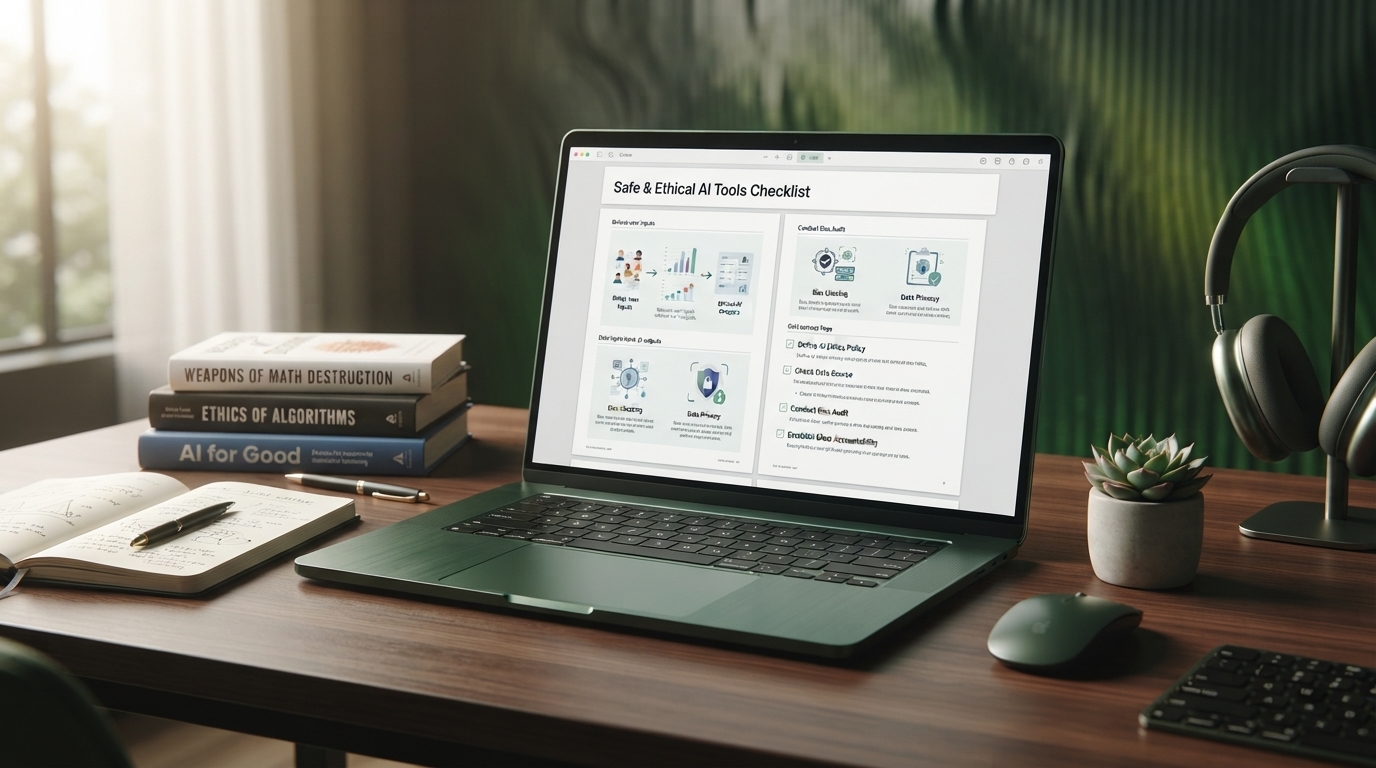
Beginner digital download: a simple checklist for ethical, user-friendly AI habits
If you want a straightforward system you can follow in real situations, A Practical Guide to Using AI Tools Safely and Ethically (digital download) organizes the essentials into a step-by-step checklist. It’s designed to help beginners choose safer inputs, verify outputs, and publish responsibly—without needing a technical background.
Helpful add-ons for common AI use cases
Writing and content
When you’re using AI to draft, the biggest risks are inconsistency (a voice that drifts), accidental misrepresentation, and unverified claims. A tone checklist can keep messaging consistent across emails, landing pages, and social posts. Consider pairing the guide with AI Tips to Elevate Your Writing Voice (editable tone checklist) to standardize what “on-brand” means before you generate or edit anything.
Lifestyle planning
AI can be useful for meal planning or building a wind-down routine, but avoid entering detailed medical data and treat suggestions as ideas, not diagnoses. Keep changes gradual, prioritize reputable sources, and consult qualified professionals for health concerns. If you’re using AI for structure and variety, AI-Powered Weekly Meal Ideas (digital eBook) and Fall Asleep Faster with AI (digital checklist) are simple, low-friction ways to apply AI without oversharing sensitive details.
FAQ
Is it safe to share personal information with AI chat tools?
It’s safest to avoid sharing sensitive personal or client information. Use anonymized placeholders, remove identifiers, and review the tool’s privacy settings and provider data policies before entering anything you wouldn’t want stored or reviewed.
Do AI tools replace fact-checking?
No—AI can be confidently wrong. For anything that could affect health, money, legal rights, or public trust, verify with primary sources and cross-check with at least two reputable references before using the output.
Can AI-generated content be used commercially without issues?
It can, but there are still copyright and originality risks, especially if content resembles a protected work or imitates a recognizable creator. Reduce risk by avoiding mimicry, keeping source notes for any research-based claims, and ensuring a human reviews, edits, and documents the final version.














Leave a comment